You are looking at a personal trainer’s profile and you see it: NASM-CPT. Or maybe ACE. Or NSCA-CSCS. You know these letters mean something. You are just not entirely sure what, or whether one is better than another, or whether the difference actually matters for you.
It does matter. But not in the way most people assume. The question is not which certification is objectively best. The question is which certification tells you what you actually need to know about the trainer in front of you.
Here is what each one actually means, without the marketing fluff.
Before comparing the three, there is one benchmark that matters more than which certification a trainer holds: whether that certification is accredited by the National Commission for Certifying Agencies, known as the NCCA.
The NCCA verifies that a certification program meets rigorous standards for exam development, continuing education requirements, and ongoing program review. NASM, ACE, and NSCA are all NCCA-accredited. That matters because there are over 100 personal training certification programs in the US, and many of them are not.
So before you get into the differences between these three, know that any trainer holding one of them has cleared a meaningful bar. The differences from there are about specialty, philosophy, and fit.
If a trainer’s certification is not NCCA-accredited, that is a problem regardless of how professional their profile looks. Always check. The NCCA maintains a public list of accredited programs at credentialingexcellence.org.
Science-based, corrective exercise focused, built on the OPT model. The most widely recognized cert in commercial gyms across the US.
Behavior change focused, client-centered philosophy. Strong in community fitness, health coaching, and working with general populations.
The gold standard for athletic performance and strength training. Preferred by trainers working with athletes and serious lifters.
NASM was founded in 1987 and has become the most widely held personal training certification in the United States. As of 2026, NASM has around 22,304 certified professionals, making it the dominant force in commercial fitness settings.
The NASM certification is built around their Optimum Performance Training model, or OPT. This is a systematic, evidence-based framework that walks trainers through stabilization, strength, and power phases of training. The emphasis on corrective exercise sets NASM apart. A NASM-certified trainer has been specifically trained to identify movement compensations and address them before they become injuries.
For clients, this means a NASM trainer is particularly well-suited for general fitness, weight loss, injury prevention, and anyone who spends a lot of time sitting at a desk and needs their movement patterns assessed before jumping into heavy training.

Three letters. Very different specialties. Here is how to tell them apart.
ACE was founded in 1985 as a nonprofit organization with a specific mission: improving public health by equipping fitness professionals with the skills to work with everyday people. That mission shows up clearly in how the certification is structured.
Where NASM leans into the science of movement, ACE leans into the psychology of behavior change. The ACE certification is built around their Integrated Fitness Training model, which emphasizes understanding what actually motivates clients, how to build sustainable habits, and how to meet people where they are rather than where you want them to be.
This makes ACE trainers particularly effective with clients who are new to fitness, returning after a long break, managing chronic health conditions, or simply intimidated by the gym environment. ACE has certified over 90,000 professionals, and their reach in community fitness, hospital wellness programs, and corporate health settings reflects that client-centered philosophy.
The NSCA is the oldest of the three, founded in 1978, and it operates in a somewhat different lane. Where NASM and ACE are primarily personal training certifications, the NSCA is best known for producing strength and conditioning specialists, particularly through their CSCS credential, the Certified Strength and Conditioning Specialist.
The NSCA curriculum goes deep on athletic performance, sport-specific training, and the science of strength development. The exam is widely considered the most academically rigorous of any personal training certification, which is why it is the preferred credential among college and professional sports programs, military fitness, and trainers who work primarily with athletes.
For a client who is a competitive athlete, a serious recreational lifter, or someone whose primary goal is performance rather than general fitness, an NSCA-certified trainer is often the strongest choice. Both the NSCA CPT and ACE are NCCA-accredited and considered top tier in the fitness industry.
| Factor | NASM | ACE | NSCA |
|---|---|---|---|
| Founded | 1987 | 1985 | 1978 |
| NCCA Accredited | Yes | Yes | Yes |
| Primary Focus | Corrective exercise, movement science | Behavior change, general wellness | Strength, conditioning, athletic performance |
| Best Client Type | General population, injury prevention | Beginners, behavior change clients | Athletes, serious lifters |
| Exam Difficulty | Moderate | Moderate | High |
| Gym Recognition | Highest | Very High | High in performance settings |
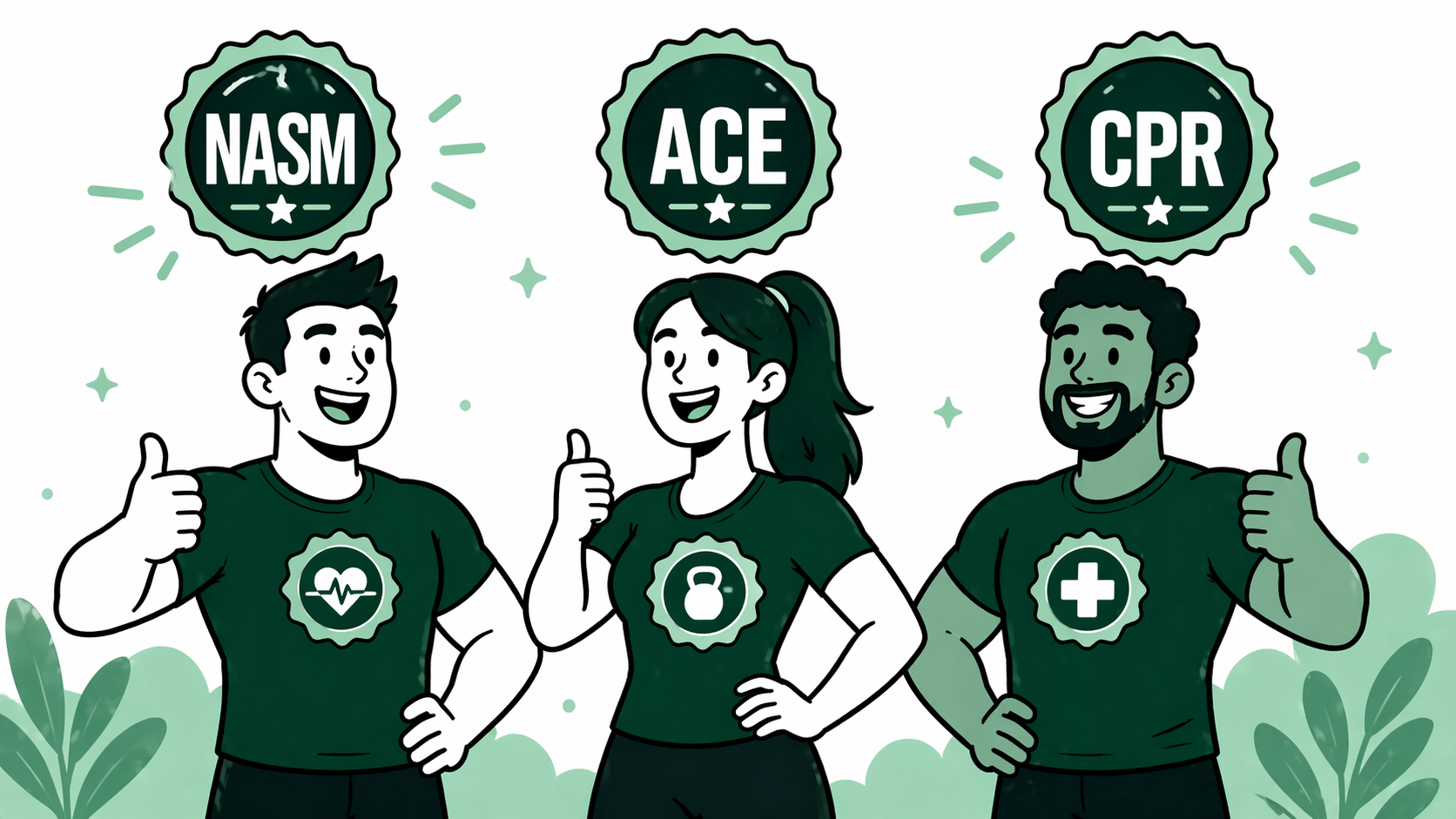
The right certification depends on what you need from your trainer, not which acronym sounds most impressive.
The honest answer is that it depends on your goals. Here is a simple way to think about it:
What matters most is not picking the “best” certification but finding a trainer whose certification matches what you actually need. A NASM trainer and an NSCA trainer are both excellent. They are just excellent at different things.
Every trainer on Verified Fit holds an active certification from NASM, ACE, NSCA, ISSA, ACSM, or NCSF. We verify credentials before profiles go live. You can see exactly which cert each trainer holds directly on their profile, so you can match their specialty to your goals before you ever reach out.
NASM, ACE, and NSCA are all legitimate, rigorous, NCCA-accredited certifications held by serious fitness professionals. None of them is a shortcut, and none of them is a guarantee of a great trainer. What they are is a meaningful baseline that tells you someone studied the science, passed a real exam, and is required to keep learning to maintain their credential.
That baseline matters more than most people realize, because a lot of people calling themselves trainers do not have it.
Know which cert fits your goals. Look for it. And when you find a trainer who holds it and can explain what it means, that is a good sign you are in the right place.
Every trainer on Verified Fit holds an active, verified certification. Browse by specialty and find the right fit for your goals today.
Find a Verified Trainer Near You →