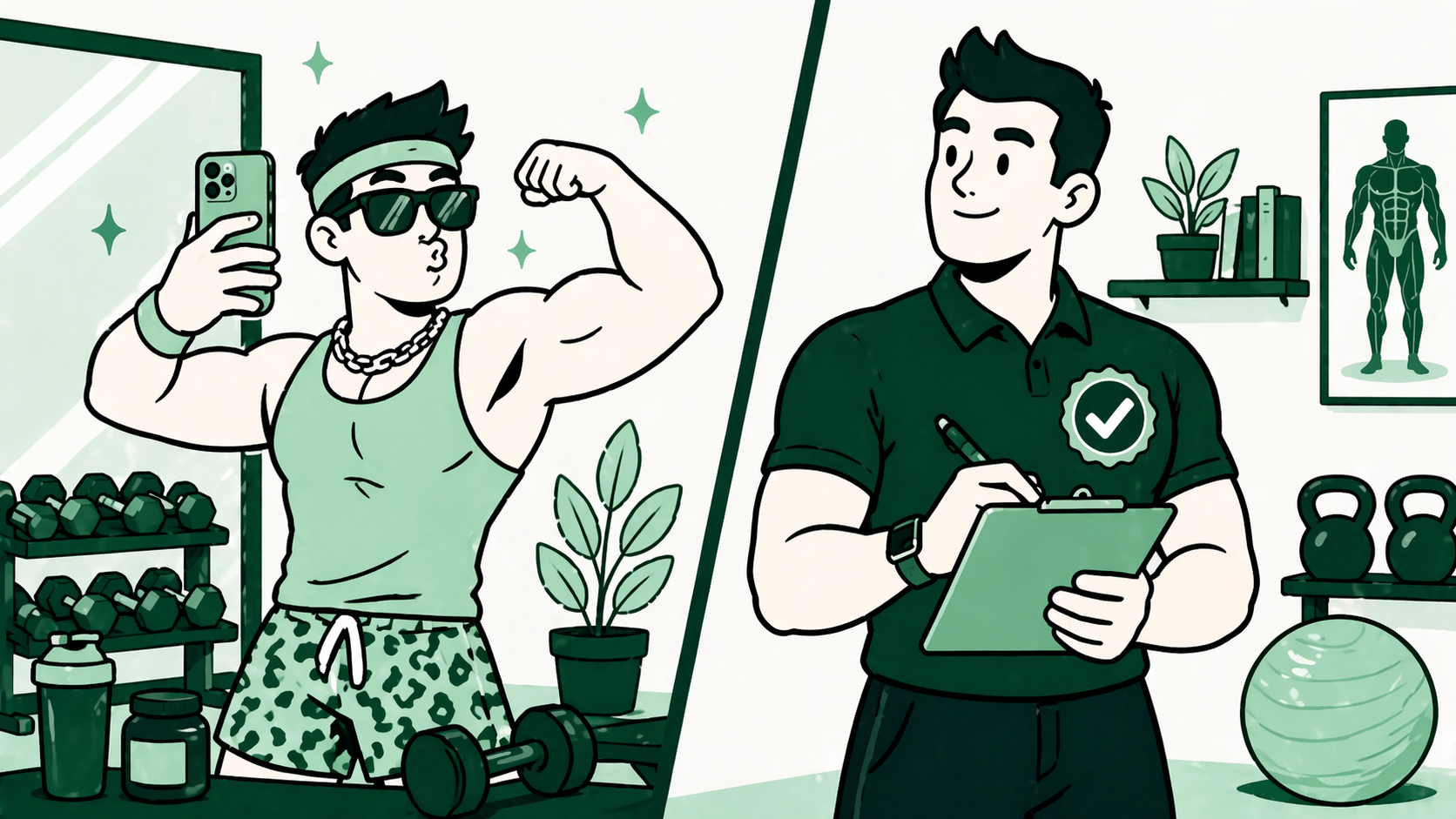
When you are looking to hire someone to help you get fit, the difference between a certified personal trainer vs a gym enthusiast who just works out a lot might not be obvious from the outside. Both might look the part. Both might speak confidently about training. But the personal trainer qualifications behind those two people are completely different, and that difference has real consequences for your health, your progress, and your safety.
The fitness industry in 2026 is worth nearly $12 billion in the United States alone, growing at over 8% per year. And somewhere in that booming, largely unregulated market, a person with great arms and a confident Instagram presence is charging $80 an hour to train clients who have no idea they are working with someone whose only credential is personal experience.
Here is exactly what separates the two, and how to tell which one you are actually dealing with.
Understanding real personal trainer qualifications starts with knowing what the certification process actually involves. Getting a legitimate personal training certification is not a weekend project. Recognized certifications like NASM, ACE, NSCA, ISSA, ACSM, and NCSF require months of study, hundreds of hours of preparation, and passing a proctored exam that cannot be googled in real time.
The curriculum covers things that have nothing to do with how good you look at the gym:
None of this is in any YouTube channel. None of it comes from years of personal gym experience. It comes from structured education, a standardized exam, and ongoing continuing education requirements to keep the certification active.
To be fair: someone who has trained seriously for years knows a lot. They know what works for their body. They know how to push through discomfort. They have probably tried enough programs to know what different training styles feel like.
What it does not include is the knowledge of how to assess your body specifically. Or how to design a program for someone with your injury history, your movement patterns, your health conditions, and your specific goals. Or what to do when something goes wrong mid-session.
Training yourself for ten years is an excellent way to become very good at training yourself. It is not a substitute for the science of training other people. That is the core of the certified personal trainer vs gym enthusiast distinction that most clients never think to ask about until something goes wrong.
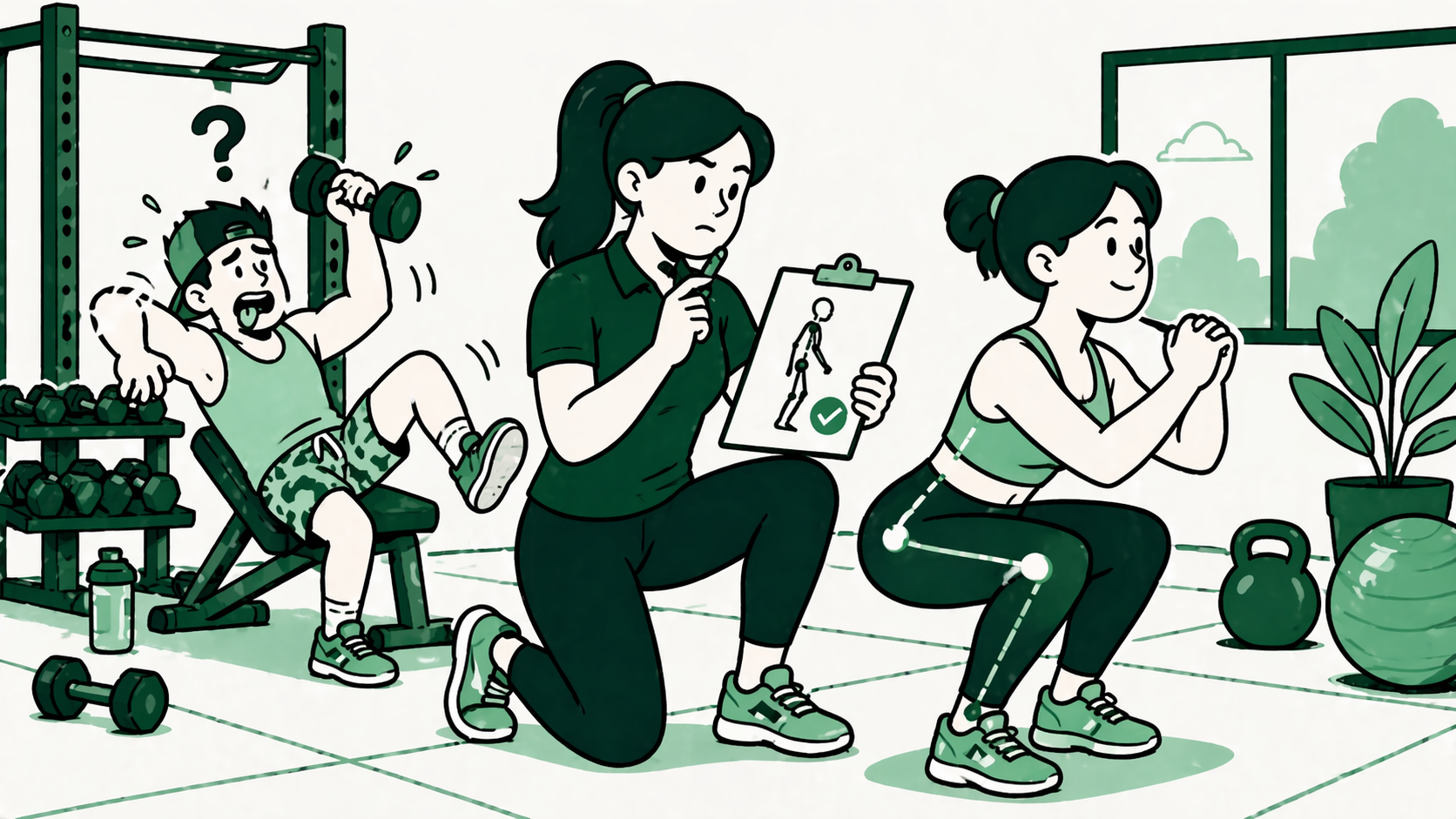
One of these people is assessing movement patterns. The other is just winging it.
Knowing how to tell if a trainer is certified is simpler than most people think. Here is exactly what to do before handing over any money:
Go to the website of whatever certification body a trainer claims. Search their name in the credential lookup tool. Active certification appears in seconds. This one step has saved countless clients from hiring someone who was never qualified to begin with. If you want to skip this step entirely, every trainer on Verified Fit has already been verified before their profile went live.
Social media has made the certified personal trainer vs gym enthusiast problem much worse in a specific way. A decade ago, finding an unqualified trainer usually meant hiring someone at your local gym who lacked credentials. Now it means following someone with 200,000 followers who sells programming with zero educational background and a very convincing before-and-after photo.
The personal training industry is projected to grow 12% through 2034, four times faster than the average for all US occupations. More people are seeking fitness help than ever before. And the barrier to presenting yourself as a fitness authority has never been lower. A phone, a gym, and some confidence is all it takes to start selling training advice online.
If you want to go deeper on this topic, our post on how to vet a personal trainer before you hire one covers the specific red flags to look for before booking anyone. And if you want to understand what specific certifications like NASM, ACE, and NSCA actually mean, our certification comparison guide breaks it all down.
The practical difference in personal trainer qualifications shows up immediately if you know what to look for:
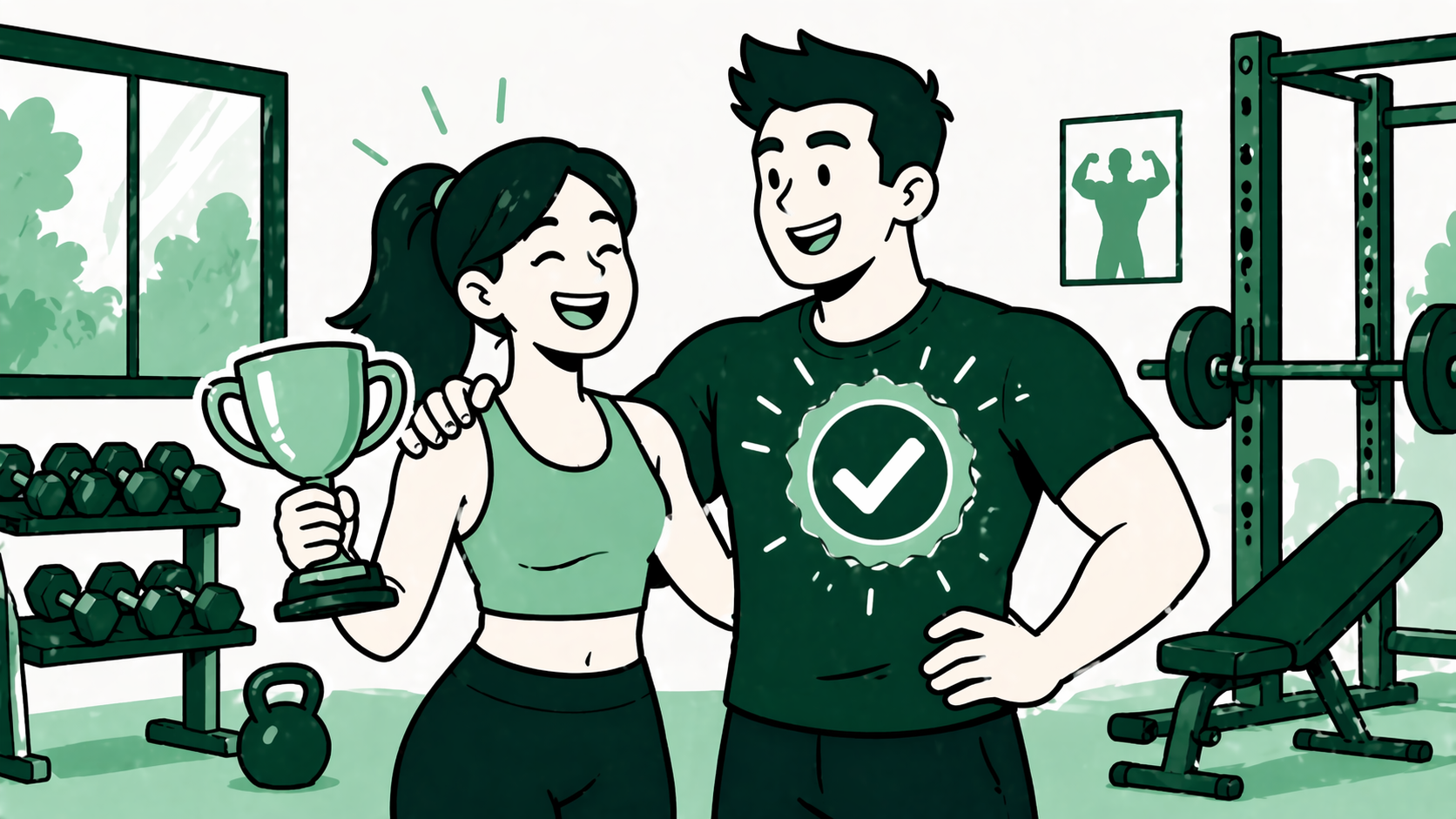
The right trainer makes your goals feel completely achievable. Because with a real plan, they are.
Do I need a certified personal trainer or is a gym enthusiast good enough?
If your goal is general fitness and you have no injury history, a knowledgeable gym enthusiast might get you some results. But if you have any existing conditions, movement limitations, or specific goals, a certified personal trainer is the only safe choice. The qualifications exist for a reason.
How can I tell if a trainer is actually certified?
Ask for the name of their certification and the body that issued it, then look it up on that organization’s public credential verification tool. NASM, ACE, NSCA, ISSA, ACSM, and NCSF all have these. An active certification will appear in the search. If it does not, the trainer is not certified.
What are the most recognized personal trainer certifications?
The most widely recognized certifications in the US are NASM, ACE, NSCA, ISSA, ACSM, and NCSF. All of these are accredited by the NCCA, which is the national standard for certification program quality. Any certification not on the NCCA-accredited list should be questioned.
Can someone be a great trainer without a certification?
Someone can be experienced and enthusiastic without a certification. But they cannot have the formal education in anatomy, program design, injury prevention, and emergency protocols that certification requires. Experience is not a substitute for education when someone else’s health is on the line.
The certified personal trainer vs gym enthusiast distinction is not about judging people who love fitness. It is about protecting yourself when you decide to trust someone with your body. Personal trainer qualifications exist because training other people safely requires knowledge that goes far beyond personal experience.
Know how to tell if a trainer is certified. Ask the direct question. Look up the credential. And if you want to skip all of that, use a platform that has already done the verification for you.
Every trainer on Verified Fit holds an active, verified certification from a recognized body. Browse profiles, see credentials upfront, and find someone who actually studied for this.
Find a Verified Trainer Near You →